
Stephanie's Story
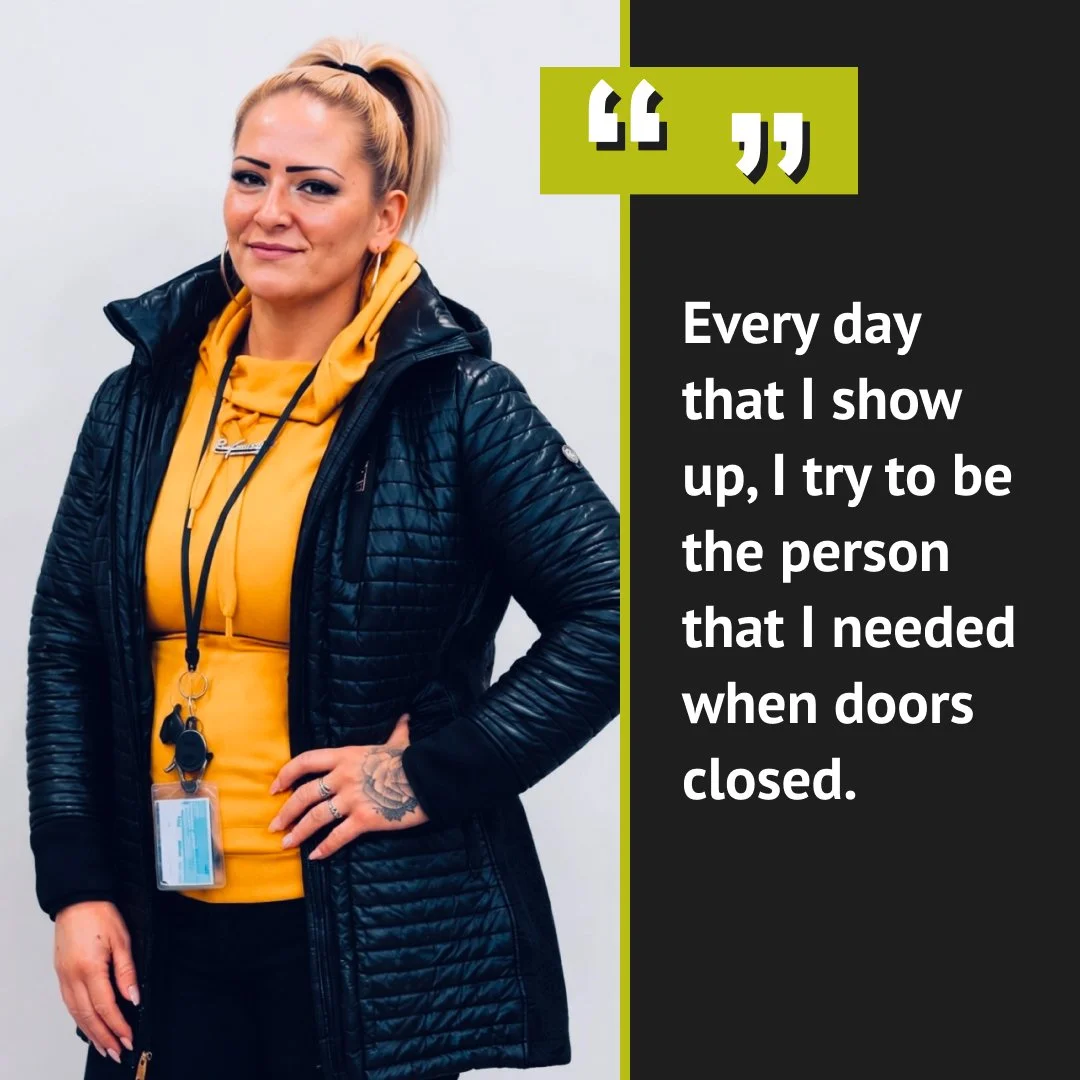
While growing up in Portland, Stephanie experienced first-hand the impact of family members who fought drug addiction. Stephanie, a single mother of four children in her teen years, faced her own challenges of raising children, battling her own addiction, and experiencing a period of homelessness.
“Having nowhere to lay our heads was the most challenging part of my life. To see so many doors close on us and experience that, is what has driven me to want to do the work that I do today,” she said, “We slept on mats on a church floor at night, and then if we were lucky, we got this ticket to a day center that had toys and a kitchen and space for me to care for the kids. I did that enough times until I realized I have to do something different. This will be our everyday until I decide to make a change. It was my addiction that was keeping us there.”
“During the days that we didn’t have access to the day center, I pulled my kids around town in a Radio Flyer wagon with nowhere to go, and it was... terrible,” shared Stephanie.
When Stephanie’s family got a shelter space at a local mission, they finally had a room and their own bathroom with a bathtub. “To see my kids in that moment, kind of like... relax for the time being… I began taking on a lot of guilt and shame,” she said.
The journey was not easy. Stephanie would relapse, and then be back at square one. She remembers receiving her eviction notice at a point when she was fully into her addiction. Feeling embarrassed and ashamed, she didn't want to reach out for help.
After struggling over and over, she remembers “Renee Stevens, the Executive Director of Open House Ministries Family Shelter called me and said, ‘Are you ready to come home?’”
After experiencing that moment where somebody cared enough, no matter what she had done, Stephanie and her family were welcome to try again and that is what motivates her to do the same.
The Transition Projects Resource Center helps connect people to a wide range of resources and services daily including: showers, laundry, mail, medical, and much more. Our staff serve the folks waking up on the sidewalk, the extremely vulnerable, people who are traumatized, and everyone in between.
“And, that was me,” Stephanie said, “I needed that person to help.”
Once joining Transition Projects, in her role at the Resource Center, Stephanie could step in and be that person offering support. Over time she became a constant source of hope for many participants, making sure the doors stayed open.
Recalling one participant she worked with at the Resource Center, “I will never forget when he came in with his house key, and he said, I haven't even called my mom yet, but I needed to come and tell you thank you. If it wasn't for you, helping me and pushing me to do this, I would have never finished.”
Building relationships with people Stephanie said, “It's almost like you know when they're ready, you can see the change and desperation in them.”
She encourages them to keep coming back, to try again. With each participant Stephanie shares what we can provide — whether an immediate need like showers and mail services, or overnight shelter — encouraging consistency and hoping to see them again tomorrow.
Now a Shift Supervisor at Naito Village, a Transition Projects low-barrier pod shelter, Stephanie brings her attitude of gratitude when she has down-to-earth conversations with participants, because she remembers what it's like being out there. “That's what I love about being at Transition Projects and having low-barrier shelters for people. We get to meet them where they're at. I'm here to show up for you no matter what,” Stephanie said.
This work serves as a daily reminder for Stephanie that she has overcome so much. Now she is able to focus on guiding someone else on their path to success.
We are all human. Regardless of your past, low-barrier shelters provide the opportunity for someone to be met where they are, with no judgment. Not everybody gets it the first time, and that doesn't mean you should lose your space to lay your head. For some the biggest obstacle to getting clean is having a safe space to lay their head.
Looking to the future, Stephanie has an important calling and she shared, “No matter where I go, I'm a leader — I've always been told that — it's in my spirit. I plan to keep using my lived-experience, all of the struggles, to be a beacon of light in somebody's darkness.“